Image Credit: The Madrona Hotel
The designer behind some of San Francisco’s most considered interiors never intended to own a boutique hotel. Then a pandemic weekend in wine country changed everything.
There are designers who set out to build empires, and then there is Jay Jeffers, who stumbled into co-owning a wine country hotel on a whim during a pandemic weekend. The San Francisco-based interior designer, whose firm, JayJeffers Inc., has long been synonymous with effortlessly intelligent luxury, was not looking for The Madrona when he found it. He simply couldn’t stop looking at it.
“The hotel was actually an accidental purchase—truly,” he says. “I had no plan or ambition to buy a boutique hotel. It was Memorial Day weekend in 2020, right in the middle of the pandemic, and a friend of mine was the listing agent. A few of us went to see it just for fun.”
Three hours later, he had mentally moved in. “I ended up spending nearly three hours walking through every room, opening every door and window,” he recalls. “It was one of those rare moments in my creative life where I could instantly see the entire future of the property. I could picture the colors, the music playing, the way people would move through the space, and spend time there.
“I could almost smell the food, feel the energy—it all came to me at once. And that was it.”
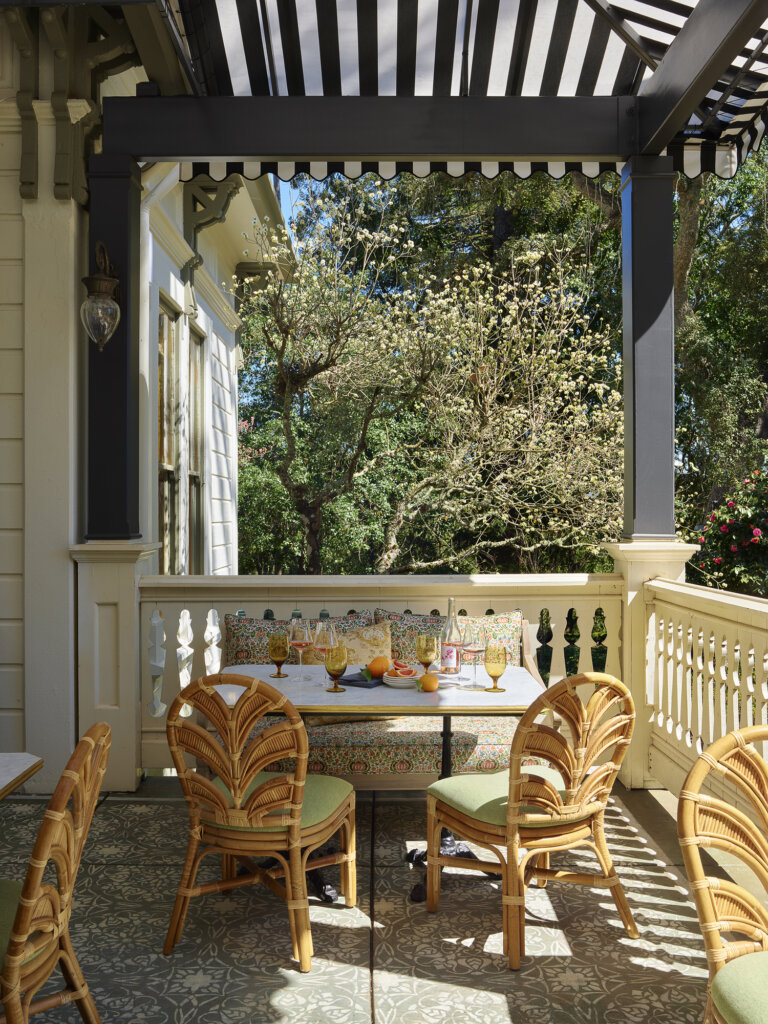

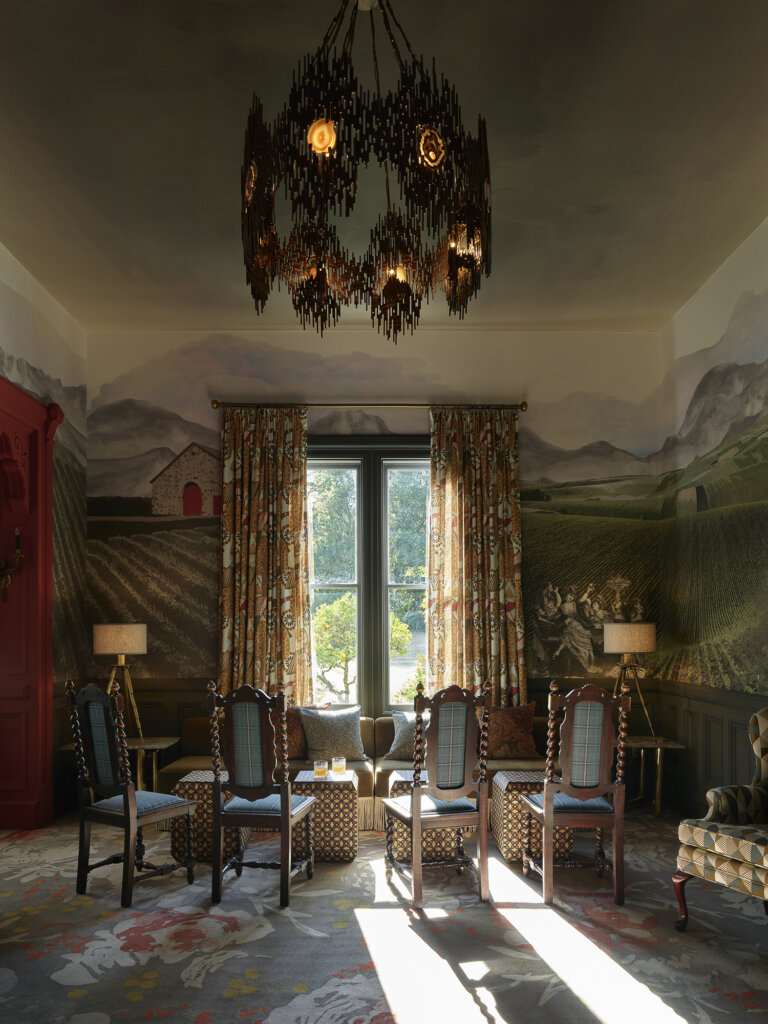
Image Credit: The Madrona Hotel
That quality of total absorption, of seeing not what a place is but what it might become, is the defining trait of Jeffers’ work. His three books trace an evolving philosophy: Collected Cool, then Be Bold, and now Modern Classic: Tailored Homes, Timeless Style, which arrives as both a culmination and a clarification. He describes the progression as an act of editing. “My first book was about layering—creating spaces that feel personal, curated, and lived-in over time. The second encouraged taking risks and making more confident, expressive choices. With Modern Classic, it all comes together. It’s about refining those ideas—editing them into something that feels both current and timeless.”
For Jeffers, “modern classic” is less a style than a standard. “It’s the intersection of what feels fresh and current with what has lasting power,” he explains. That ambition extends to how he thinks about collecting, about proportion, about the deliberate layering of periods and textures that gives a room what he calls, simply, soul.
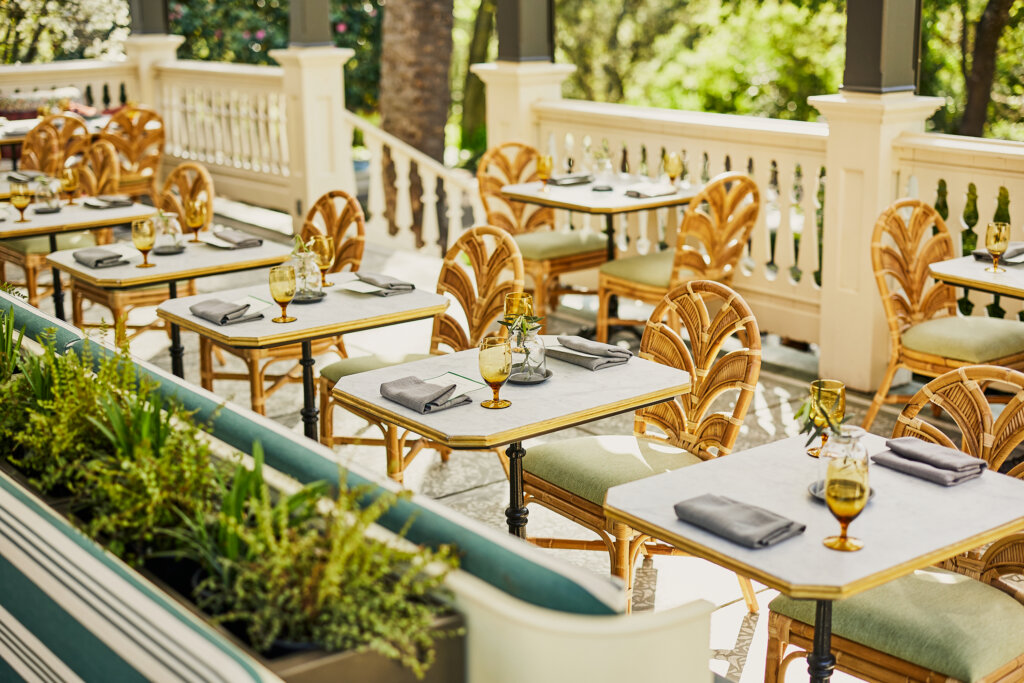
Image Credit: The Madrona Hotel
A Healdsburg State of Mind
The Madrona, set in Healdsburg in Sonoma County, gave Jeffers a canvas with its own complicated history. The estate had been a gathering place for locals and longtime patrons long before he arrived, and its bones belonged to a different era entirely. “I started doing a bit of research and discovered the estate was built during the Aesthetic Movement,” he says. “Whether that movement ever truly made its way to Healdsburg, I don’t know—but I chose to imagine that it had.”
The Aesthetic Movement, with its devotion to beauty for beauty’s sake, its Wildean pleasure in surfaces and objects, proved the right philosophical framework. “This was when interior design, as we think of it today, was born—when people began collecting and living with art simply because they loved it, not because it was religious or political.”
“It was about beauty, pleasure, and really enjoying your surroundings.”
He wanted the walls to suggest a century of slow accumulation, “as though someone had been collecting there over the past 50 years,” a vision reflected in the layered mix of objects throughout the space. “We have modern works, but also pieces from the original Paxton family,” he explains, noting details like etchings in simple brown frames that, when turned over, reveal the inscription “Gumps 1886.”
Still, he is careful to resist preciousness, emphasizing that “the way to keep a space from feeling too precious is exactly that balance—mixing old with new, incorporating pieces that spark curiosity, and layering in things that feel personal and a bit unexpected.” The result lands somewhere between extremes: “I don’t consider myself a maximalist, but I’m certainly not a minimalist either—I fall somewhere in between, drawn to an edited, collected feel.”
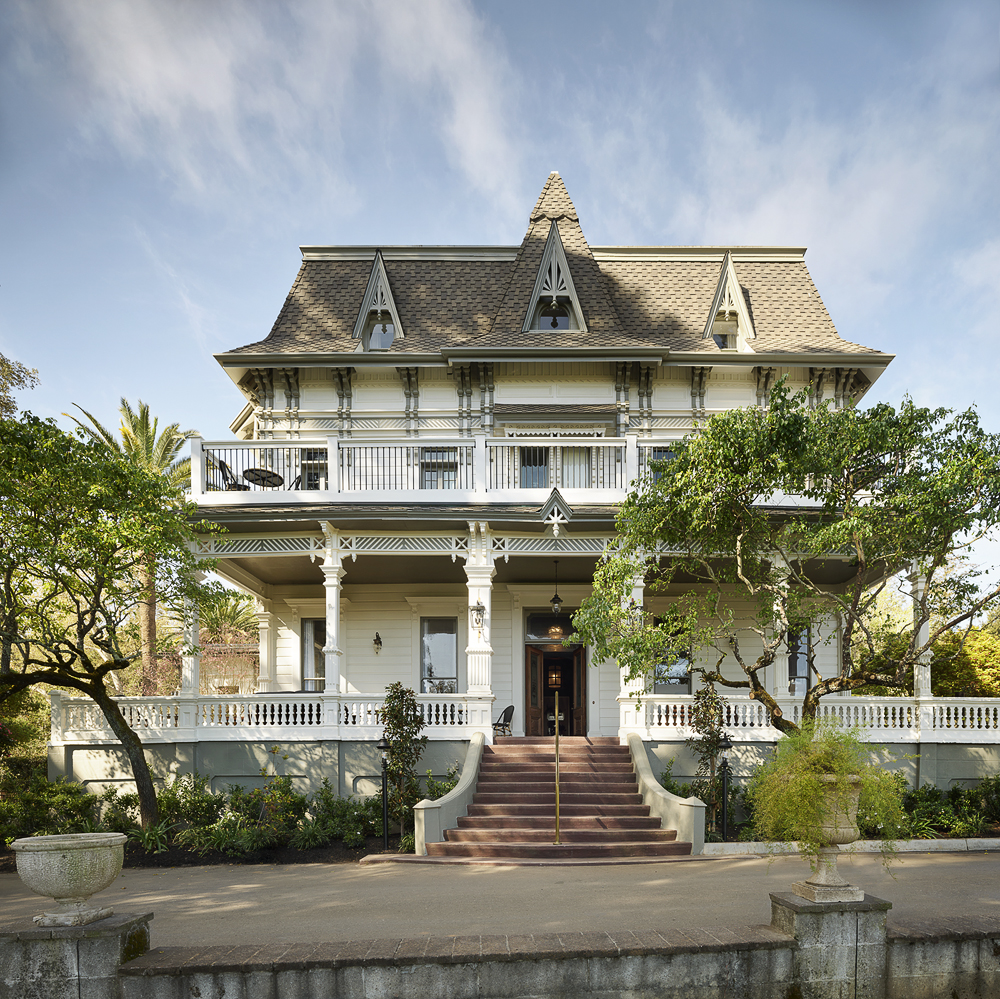
Image Credit: The Madrona Hotel
The San Francisco Edit
Ask Jeffers about the city he has called home for thirty years, and his answers arrive with the specificity of someone who navigates it on foot. He gravitates toward Eureka Valley, just above the Castro, for its residential quietude, and Hayes Valley for the dailiness of dog walks and groceries. His creative fuel comes from urban hikes along the Embarcadero, the historical texture of Jackson Square, and the world-class holdings of museums like SFMOMA, where the Fisher Collection regularly stops him cold.
His itinerary for design-savvy visitors is ruthlessly curated: a long walk through the Presidio, lunch at Cotogna, an hour at the de Young Museum nestled in Golden Gate Park, drinks at Linden Room, dinner at Zuni Café.
For those hunting vintage and art, he points to Lost Art Salon, a find-of-a-lifetime kind of place. “They have vintage art collections in every price point. The ‘salon’ style hanging that is so popular today was really a necessity in Paris in the 20th century—galleries would fill their walls with as much art as possible for shows in order to sell it. Lost Art feels like you might be stepping back in time. You might need an absinthe cocktail when you arrive.”
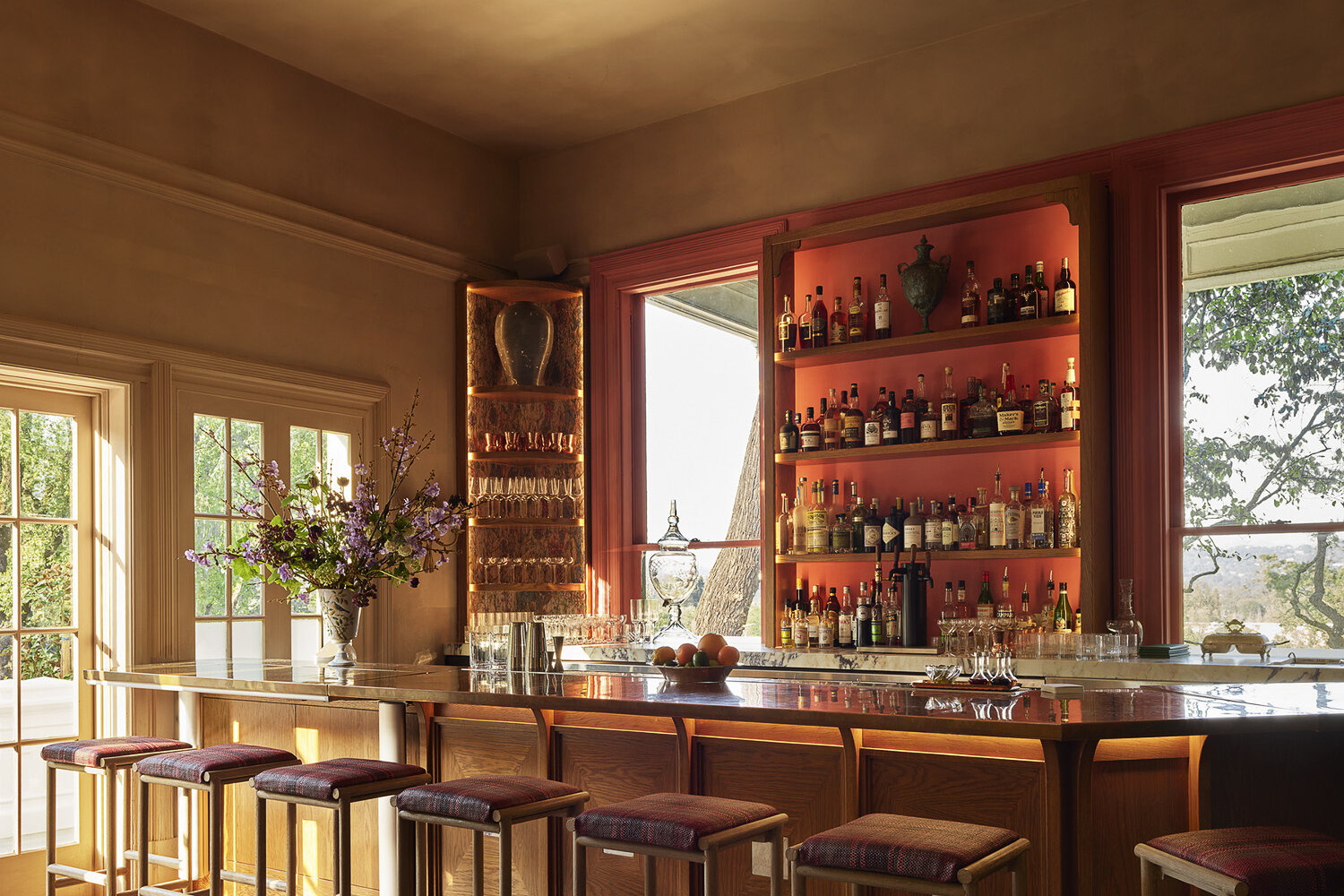
Image Credit: The Madrona Hotel
What Makes a Boutique Stay Matter
As someone who now sits on both sides of the hospitality equation, Jeffers has thought hard about what separates a soulful boutique property from one that merely has good taste. “Soul to me is the layered, thoughtfulness of not just furnishings, but art and accessories and books,” he says.
“That element of surprise and delight—whether it be the plates, the cocktail napkins, the Andes mint on the pillow—a nod to nostalgia—or the art on the walls. One can absolutely tell if it has been thoughtfully curated or just ordered online and installed.”
His benchmark properties share a residential warmth: Chiltern Firehouse in London, JK Place in Florence and Capri, and Il San Pietro in Positano. His most recent surprise came from The TwentyTwo in London. “The room, while tiny, didn’t matter because it was just so cozy and fabulous,” he says. He ended up in the private club lounge, struck up a forty-five-minute conversation with a stranger, and only at the end discovered the man was one of the owners.
That is, ultimately, what Jeffers chases in every project, whether it is a Pacific Heights townhouse or a Healdsburg estate: the sense that the people behind a space thought about it long and carefully, that beauty was the point, and that a guest or an owner or a visitor might step through a door and feel, immediately and without explanation, that they have arrived somewhere worth staying.

Pictured: Jay Jeffers