How Rachel Turchin Left Corporate Law and Found Her Life’s Work on 85 Acres in Hendersonville, North Carolina
From Bryant Park fashion shows to Miami courtrooms to a working farm in North Carolina, Rachel Turchin’s journey to The Horse Shoe Farm was anything but direct. Now, she’s building something rarer than luxury: a place where regeneration and beauty are inseparable, where stewardship is the point, and where guests don’t check in—they settle in.
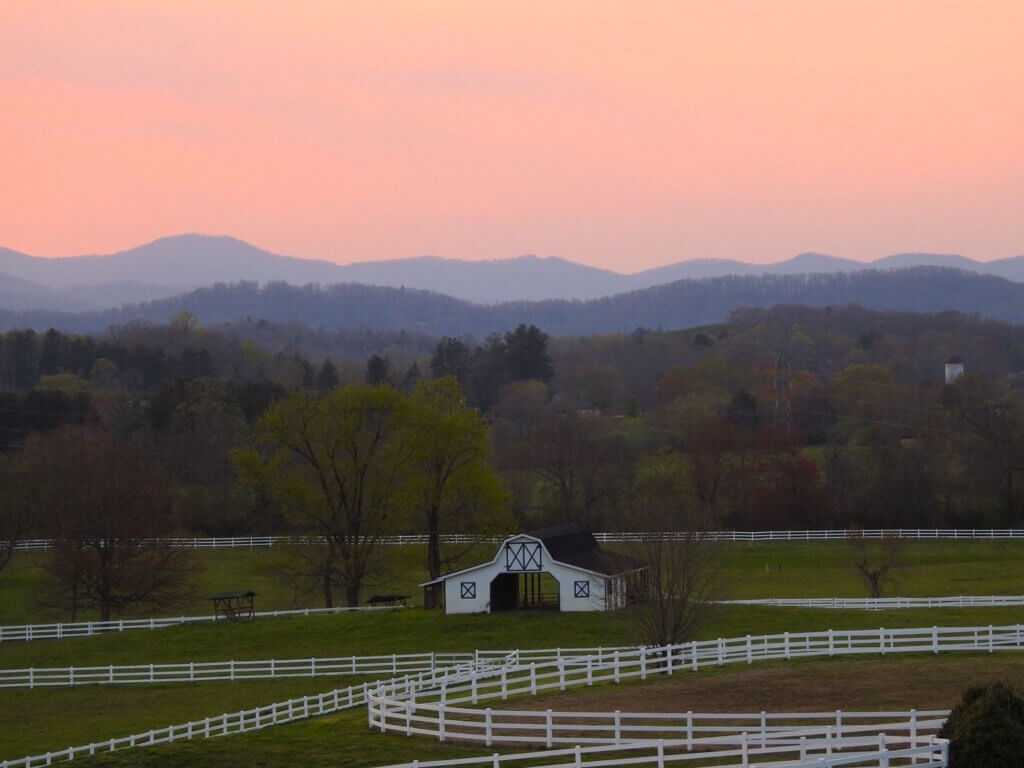
There’s a quality to morning light in the endless mountains that doesn’t exist anywhere else. It moves slowly across open pasture, catches on mist, settles into the kind of quiet that makes you realize how much noise you’ve been carrying without knowing it.
The Horse Shoe Farm exists not because hospitality was the plan, but because the land asked for something and Turchin had spent enough time listening—to her own restlessness, to what mattered, to the difference between ambition and calling—to know when to say yes. This is not the typical founder story. Turchin came to this work sideways, through fashion PR in New York, corporate law in Miami and Los Angeles, motherhood, and the slow recognition that the life she’d built with precision was no longer the life she wanted to live. The Horse Shoe Farm is what happened when she stopped running toward the next logical step and started paying attention to what felt true.
The Horse Shoe Farm wasn’t the plan. It was the interruption that became the point. The Horse Shoe Farm wasn’t a hospitality project—it was just land, beautiful and vast and asking to be cared for. This place had the capacity to hold people in a way cities couldn’t. It could offer restoration, not as an amenity but as a byproduct of being somewhere real.
“At a farm-stay, you’re not just visiting a place—you’re stepping into a living ecosystem,” Turchin explains. “There’s weather that matters, animals that depend on care, soil that’s being tended, food grown with intention. You wake up to mist over pasture instead of traffic. Your morning coffee might overlook horses grazing or gardens being harvested. It’s immersive in a way that’s hard to replicate anywhere else. Slower, more tactile, more rooted.”
She adds, “You don’t just check in. You settle in.” It’s the distinction that defines everything about The Horse Shoe Farm—the difference between hospitality as transaction and hospitality as invitation, between a beautiful setting and a place that asks you to pay attention, to notice, to participate in something larger than yourself.
The Horse Shoe Farm keeps two horses, not for riding but for presence. Alongside sheep, goats, chickens, ducks, and bees, they contribute to what Turchin calls “a sense of calm and connection on the land.” This isn’t a working ranch or an equestrian property in the traditional sense. It’s something quieter, more contemplative. Guests join morning feedings, observe the animals in the pasture, and spend time near the barn without an agenda or itinerary.
“Being around the horses, even without riding, invites stillness,” she explains. “It’s grounding, and for many guests, unexpectedly moving in its simplicity.” There’s a humility to farm life that translates directly into the guest experience. You see the work behind beauty—the feeding, the planting, the mending, the stewardship. Farms operate on rhythms bigger than human urgency, and that awareness changes how you inhabit time. “You begin to feel connected not just to the property, but to the hands that care for it,” Turchin says. “It invites you to participate rather than simply observe.”
The rhythms of the farm—feeding times, seasonal cycles, the way winter feels different from summer—create a natural structure that guests unconsciously align with. “There’s something deeply comforting about knowing the horses are fed at dusk, that the gardens shift with the season, that the land is cared for in a way that’s consistent and enduring,” she says. These rhythms foster a sense of belonging, like you’re temporarily part of something larger than a vacation.
Regeneration is not about doing less harm, but about actively contributing to the health of the land. “Travel leaves a footprint,” she says. “Choosing a regenerative property means your stay contributes to the health of the land rather than extracting from it. It’s a quiet but meaningful way to align your values with your vacation.”
At The Horse Shoe Farm, regeneration isn’t abstract or aspirational—it’s visible. Guests see rotational grazing practices that restore soil health, composting systems that close nutrient loops, pollinator habitats that support biodiversity, gardens that change throughout the year in rhythm with what the land can support. They can walk the fields, learn about soil composition, join seasonal farm activities. “It’s tangible, not just a philosophy on paper,” Turchin says. And that tangibility matters. People want to know their choices have meaning.
The difference between a beautiful property and a regenerative one? “Beauty alone can feel curated,” she explains. “Regeneration feels alive. There’s depth behind the aesthetic, purpose behind the design. Guests often say they leave feeling restored not just because it was pretty, but because it felt meaningful.” It’s the difference between a setting and an ecosystem, between a hotel that sits on land and one that tends it.
“Beauty alone can feel curated. Regeneration feels alive.
Ask Turchin to describe the perfect day at The Horse Shoe Farm, and she paints it with the unhurried precision of someone who has lived it many times over. Coffee on your porch, watching horses and animals head out to pasture as morning light spreads across the fields. A walk through open land or along the creek that runs through the property, the kind of walk where you notice things—the way mist moves, the particular quiet of a place without traffic, the smell of earth and grass and growing things.
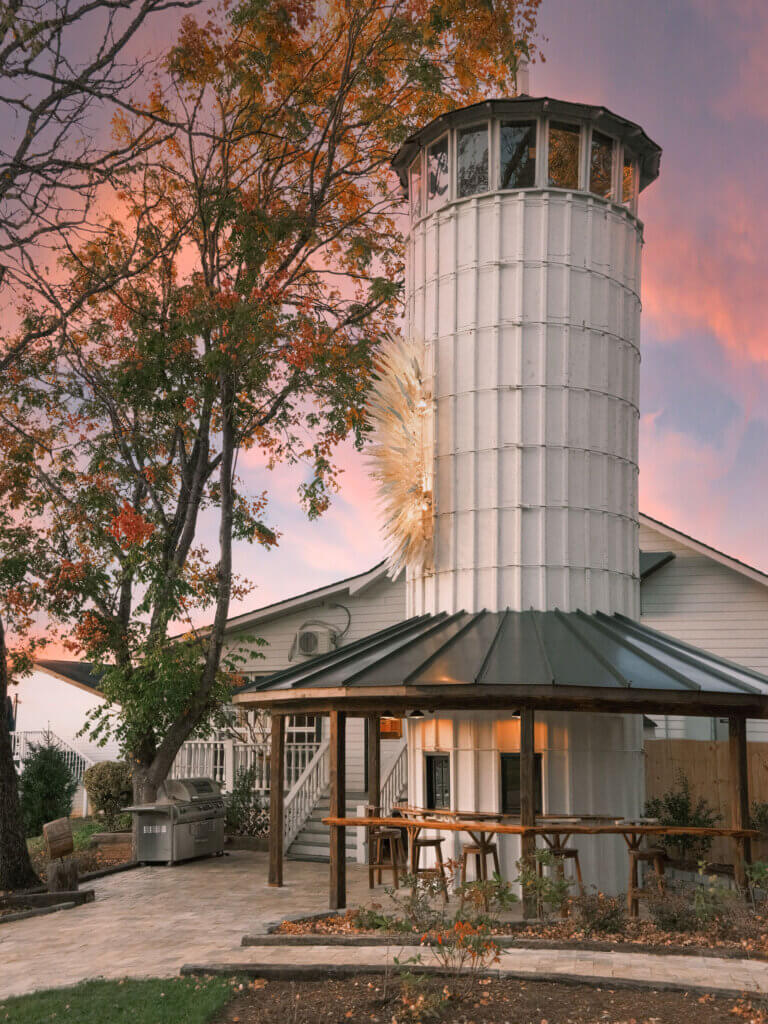
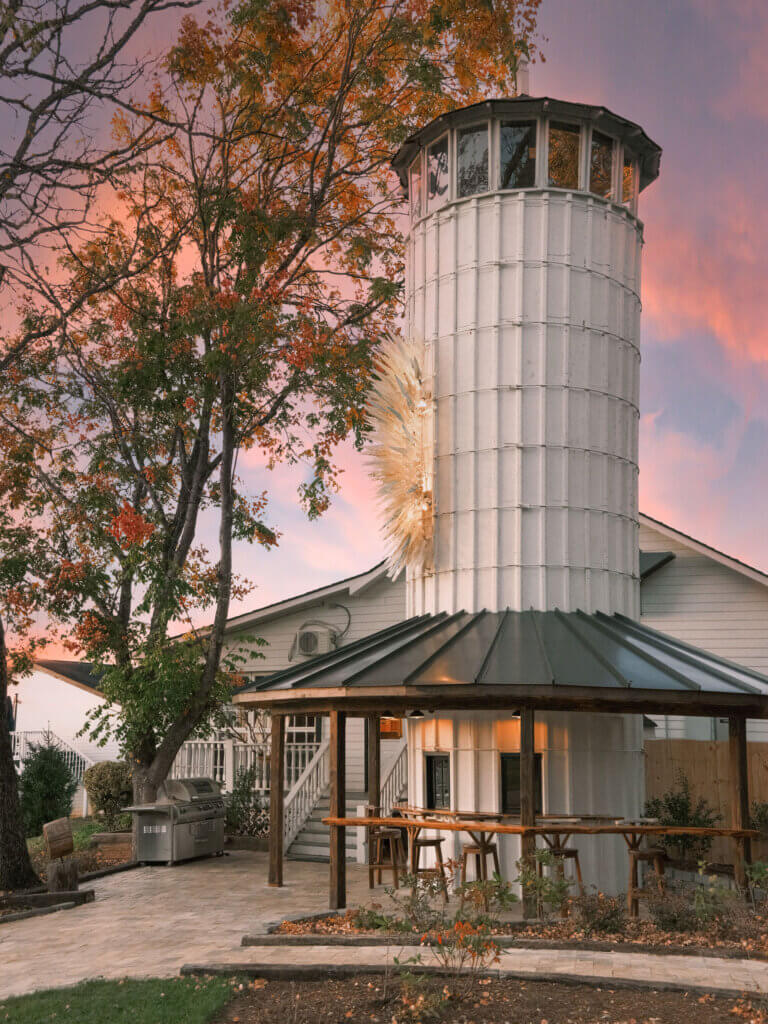
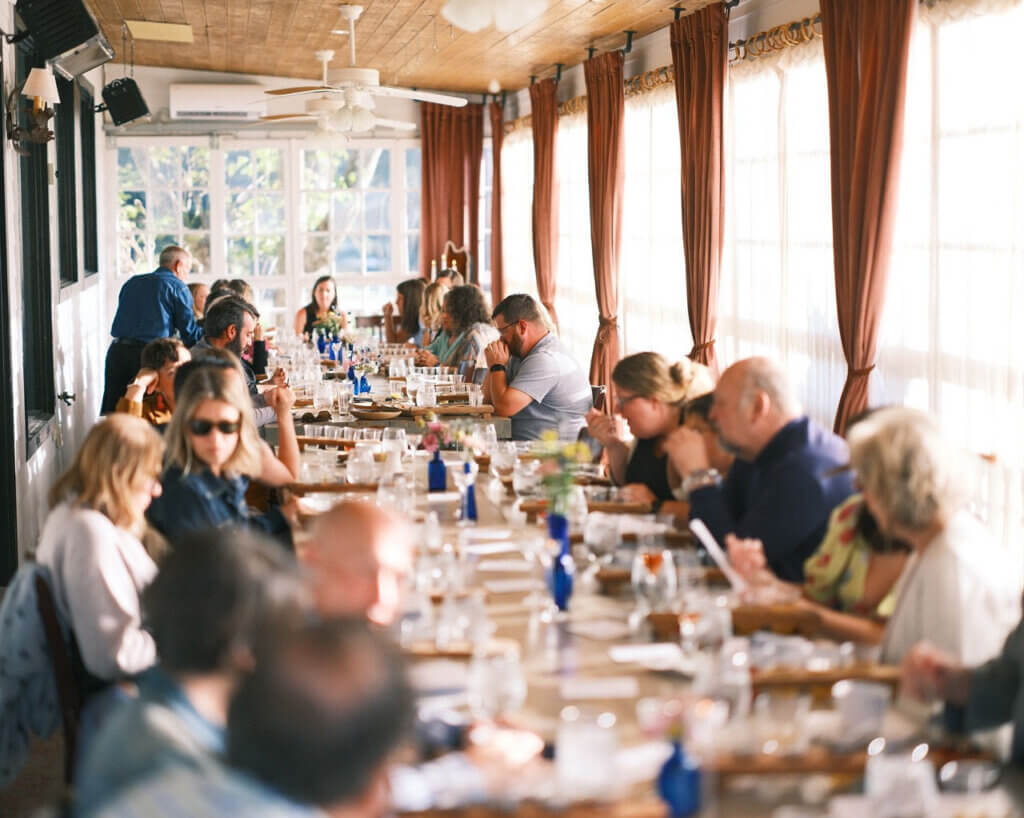
Breakfast in The Silo Cookhouse is nourishing in the literal sense—seasonal, local, prepared simply. Midday might mean guided breathwork or yoga, a massage in The Stable Spa, or the act of reading under a tree. As afternoon light begins its slow shift toward evening, guests gather for dinner, often outdoors, fire crackling, conversation unfolding in the way it does when there’s no need to rush toward the next thing.
“It’s not programmed,” Turchin says. “It unfolds.” The distinction is everything. There’s no concierge directing your experience, no curated itinerary designed to maximize your time. The Horse Shoe Farm operates on a different principle entirely: that rest requires space, that restoration comes from allowing rather than doing, that the best hospitality creates conditions for guests to find their own rhythm rather than imposing one.
Turchin cooks for her family the way she feeds guests at The Horse Shoe Farm: thoughtfully, simply, without performance. “For us, food is care,” she says. “Cooking for family means choosing ingredients thoughtfully, preparing them simply, and gathering around a table without pretense. That philosophy extends to our guests. We focus on seasonal, local sourcing and meals that feel generous but grounded. It’s nourishment, not spectacle.”
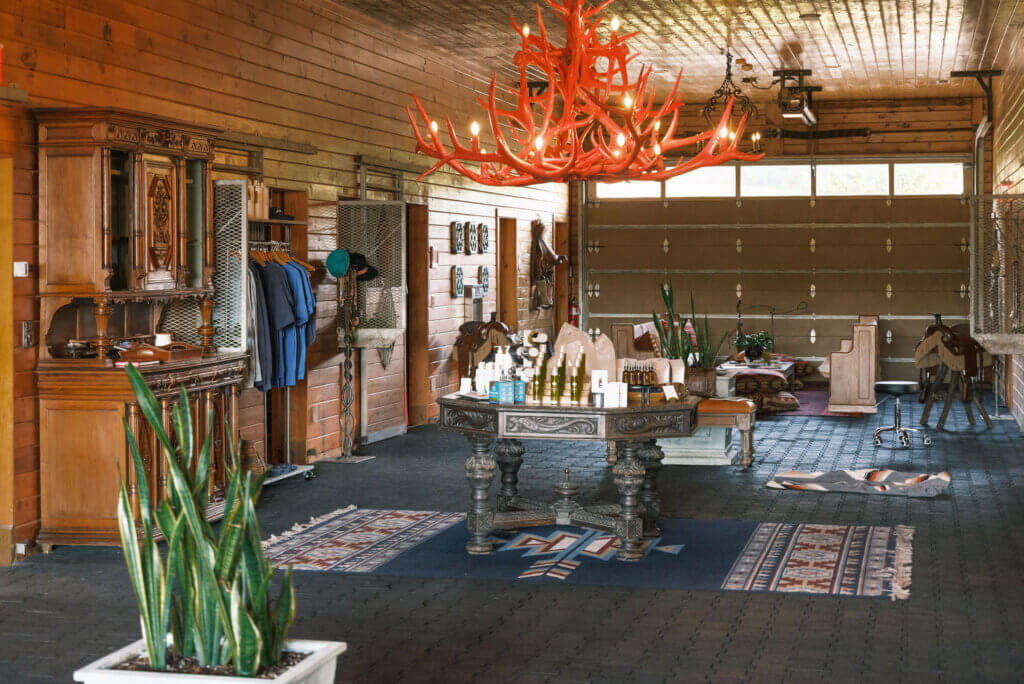
There’s a particular aesthetic emerging here, one that refuses the binary of rustic versus refined. Fresh eggs alongside fine linens. Muddy boots near a thoughtfully designed barn. It’s real, honest, grounded in a way that feels increasingly rare. “Expect to see the work behind beauty,” Turchin says when describing what first-time farm-stay guests should anticipate. “The feeding, the planting, the mending, the stewardship. There’s a humility to it. Farms operate on rhythms bigger than us, and that’s what makes it special. You’re reminded that hospitality can be both refined and grounded.”
Turchin directs visitors toward atmosphere over attraction. Epic forests. Peaceful country roads that wind through a landscape unchanged in the best way. Local lakes. Small towns where antique shops and seasonal farm stands operate on trust and cash boxes. “It’s less about attractions and more about atmosphere,” she says.
Her personal roster of recommendations reflects this ethos. The Hendersonville Farmers Market on Saturdays at the Seventh Avenue Depot District. Jeter Mountain Farm in fall, when rows of apple trees stand against mountains and cider tastes the way October should. Ecuesta Market after riding or running the Ecuesta trail. East Fork Pottery in Asheville, where clay and community converge in a way that feels both artful and unpretentious. Hiking to Looking Glass or cooling off at Skinny Dip Falls. The Biltmore Estate gardens as reminder that cultivated land can feel both grand and intimate.
When Turchin needs her own restoration, she heads to the top of the Blue Ridge Parkway, to overlooks where mountains roll endlessly into the distance. “There’s something about that elevation and expanse that immediately shifts your perspective,” she says. “If we have more time, we’ll hike down into the forest to a cool, clear stream nearby. Sitting by the water, letting the sound of it move over stone, has a way of washing everything away. It’s simple, quiet, and always restorative.”
When Turchin travels, she gravitates toward properties that understand the same thing she’s built at The Horse Shoe Farm: that land stewardship and refined hospitality aren’t opposing forces, but complementary ones. Blackberry Farm in Tennessee. Harmony Hotel in Nosara. Atzaro in Ibiza. Finn Lough in Ireland. Smaller European agriturismos where farming remains central to the guest experience rather than a decorative backdrop. Esalen Institute. Twin Farms. Soho Farmhouse UK.
“We’re drawn to rural Italy and France, the Costa Rican jungle, the American West,” she says. “Places where food is local by necessity, not choice. Where pace is dictated by land and weather rather than itinerary. The common thread is authenticity—places that feel connected to something larger than the guest experience, where hospitality emerges from a genuine relationship with place rather than an imported concept.”
Her advice for travelers choosing a farm-stay? Ask how the land is being cared for and whether it’s central to the experience or simply a backdrop. “Every farm-stay is different,” she notes. “Some are production farms, some are equestrian properties, some are focused on hospitality within open agricultural space. What matters is whether there’s genuine stewardship and a clear relationship to the land. At The Horse Shoe Farm, it’s about space, intention, and respect for the landscape. The animals, the pastures, the gardens, the preserved open fields—they all contribute to a feeling of being somewhere real.”
“A true farm-stay should feel grounded, not themed. Connected to the land in an honest way.”
What surprises guests most about The Horse Shoe Farm, Turchin says, is how quickly they unplug and how restorative it feels. “Many arrive expecting a novelty and leave feeling deeply grounded.” It’s the difference between an experience designed to be photographed and one designed to be felt, between hospitality that performs and hospitality that simply holds you.
Who is this for? “The curious and the thoughtful,” she says. “The ones who value experience over spectacle. Travelers who want beauty with substance and who care how a place operates as much as how it looks. Those seeking connection—to land, to animals, to food, and to themselves.” It’s for people tired of hospitality that treats guests like transactions, tired of luxury that announces itself, tired of places that feel designed for someone else’s Instagram rather than your own restoration.
A true farm-stay, Turchin insists, should feel grounded, not themed. It should feel connected to the land in an honest way. At The Horse Shoe Farm, that honesty manifests in every detail—the animals that actually live there, the gardens that produce food served at dinner, the fields preserved not for aesthetic but for ecological function, the sense that you’re not visiting a simulation of rural life but stepping into the real thing, made beautiful through care.
Rachel Turchin built The Horse Shoe Farm not as hotel project but as answer to a question she’d been asking for years without knowing it: What does it mean to tend something? To create beauty that serves a purpose beyond itself? To build hospitality around regeneration rather than extraction, around presence rather than performance, around the belief that luxury, at its best, is inseparable from responsibility?
The land asked. She answered. Everything else—the Silo Cookhouse, the Stable Spa, the guest rooms that overlook pasture, the seasonal dinners around the fire, the morning feedings, the quiet that feels alive rather than empty—unfolded from there. Not as plan, but as natural consequence of paying attention to what mattered most.
We use cookies on this website to analyse your use of our products and services, provide content from third parties and assist with our marketing efforts. Learn more about our use of cookies and available controls: cookie policy. Please be aware that your experience may be disrupted until you accept cookies.